
Data Strategy & Governance
Most organisations do not have a data problem so much as a data-trust problem. Reports disagree, definitions drift between teams, and nobody is quite sure which number is correct. Before a single model is built, that foundation has to be sound.
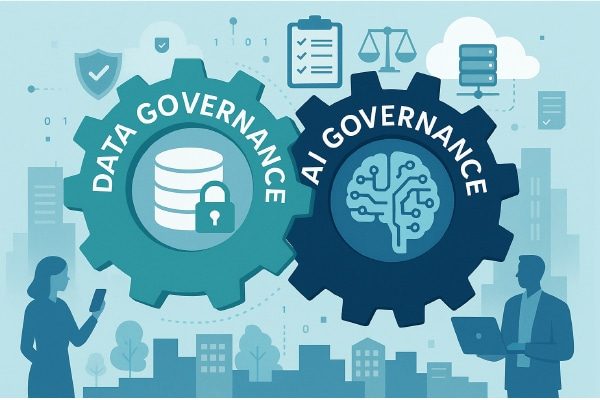
Most organisations do not have a data problem so much as a data-trust problem. Reports disagree, definitions drift between teams, and nobody is quite sure which number is correct. Before a single model is built, that foundation has to be sound.
We start by mapping what data you hold, where it lives, who owns it and how trustworthy it is. From there we design governance that is light enough to follow and strict enough to defend — so every later investment in analytics or AI stands on solid ground.
The cost of skipping this step is rarely visible until later. Teams build models on data nobody trusts, ship dashboards that contradict each other, and discover — usually during an audit or a board question — that they cannot say where a number came from. Governance is the unglamorous work that prevents all of that.
We keep governance proportionate. A twenty-person company does not need the same machinery as a bank, and imposing heavy process where it is not warranted simply gets ignored. The aim is a framework light enough that people actually follow it and strict enough that it holds up when it matters.
Data Strategy & Governance
Data maturity assessment
A clear, honest picture of where you stand and the two or three moves that matter most next.
Governance framework
Ownership, definitions and access rules written down and agreed, not left to tribal knowledge.
GDPR & compliance mapping
Know what personal data you hold, on what legal basis, and for how long.
Metric definitions
One agreed definition per KPI, so reports finally reconcile.
Data catalogue
A searchable map of your data estate so people stop rebuilding the same tables.
Data quality baseline
Automated checks that flag broken data before it reaches a dashboard.
Map what exists
We inventory your data — where it lives, who owns it, how it flows and how far it can be trusted — so decisions rest on reality, not assumption.
Agree the definitions
We facilitate the conversations that turn implicit, conflicting definitions into one agreed dictionary the whole organisation shares.
Design the guardrails
We write governance that fits your size: ownership, access, retention and quality rules that are enforceable rather than aspirational.
Hand over a roadmap
You leave with a prioritised plan — the two or three moves that matter most next — and everything documented and yours to keep.
A course we chart together
Chart
We map your data, systems and goals into a shared plan.
Build
Pipelines, models and agents built in short, reviewed cycles.
Prove
We validate against real metrics before anything ships.
Sustain
Monitoring, governance and handover so it lasts.
Data Strategy & Governance
No. A lean 20-person company benefits as much as an enterprise — often more, because getting the foundation right early avoids years of accumulated mess.
No. We work with what you have and only recommend tooling once the governance model justifies it. Open-source options cover most needs.
Minimal. Most of the work is interviews and documentation. We aim for a framework people actually follow, not a binder nobody opens.
A maturity assessment, a governance framework, a metric dictionary and a prioritised roadmap — all yours to keep.

Ready to chart a course?
Book a 30-minute discovery call. We will tell you honestly whether this is the right first port of call.
Book a discovery call →